Handwashing
33% of neonatal death in India is due to infections.
Handwashing is one of the best ways to prevent yourself and your newborn babies from getting infections.
When Should the Caretaker of Baby Wash Hand?
You can prevent yourself and your newborn babies from getting infections by washing your hands frequently, especially during the crucial times when you have more chances to get and spread infections.
- Before, during and after cooking food.
- Before eating food.
- Before and after handling someone who is sick.
- Before and after handling a wound.
- After using the toilet.
- After changing diapers or cleaning up a baby who has used the toilet.
- After blowing your nose, coughing or sneezing.
- After handling an animal.
- After handling garbage.
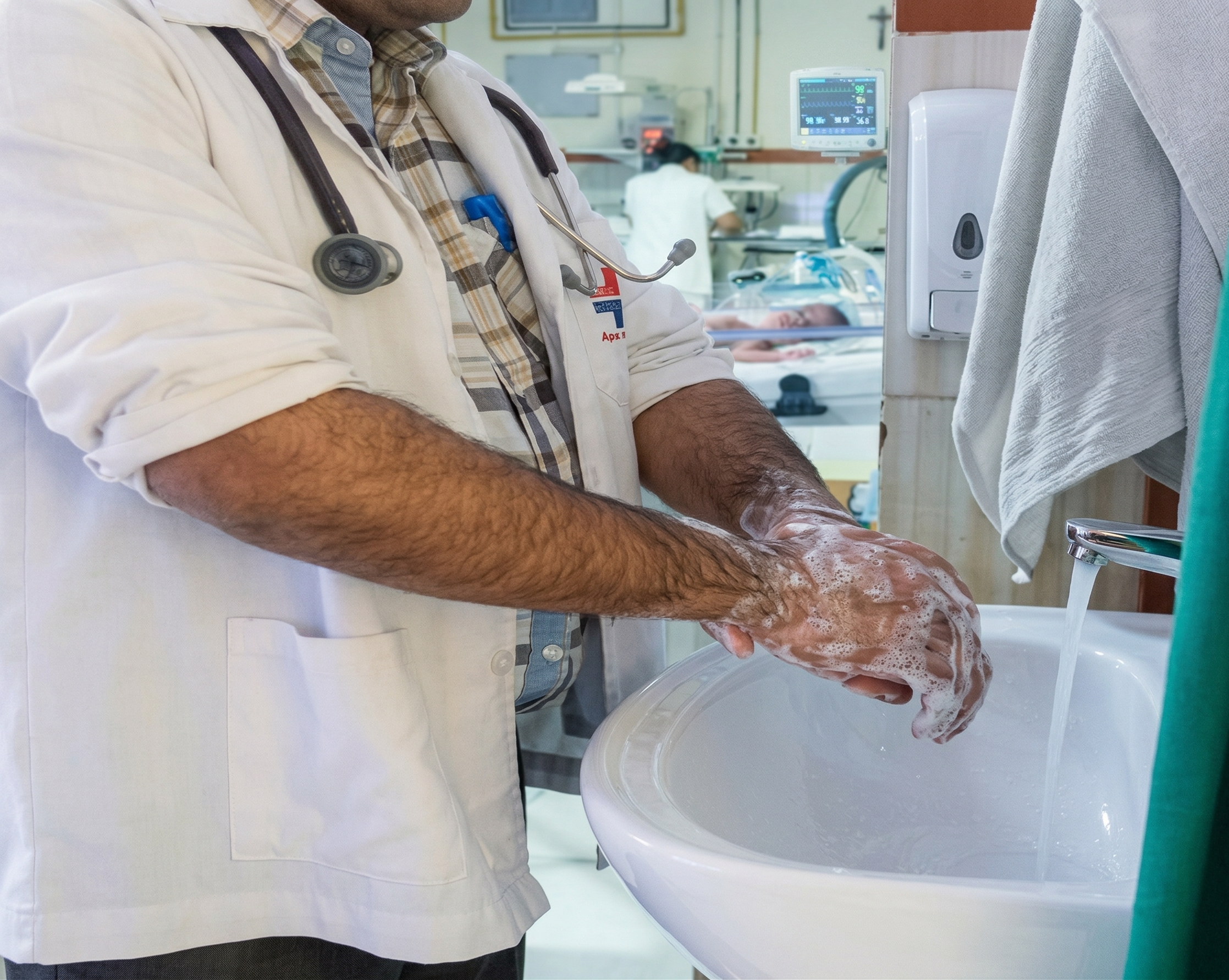
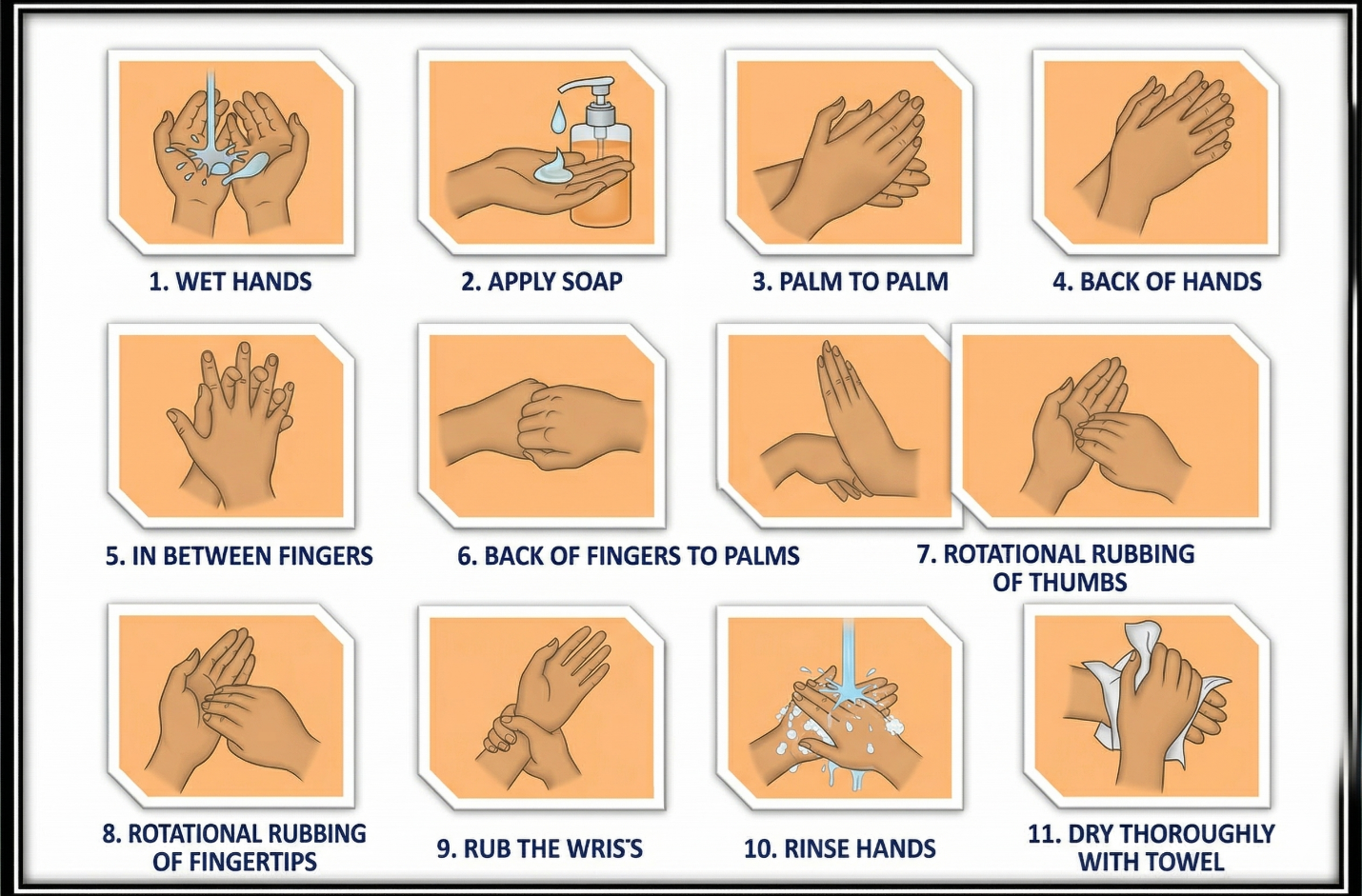
Steps of Handwashing
11 steps of handwashing
When You can’t Use Soap and Water, Use Hand Sanitizer
- Washing hands with soap and water is the best way to get rid of infections in most situations. If soap and water are not readily available one can use an alcohol-based hand sanitizer that contains at least 70% alcohol. Sanitizers can rapidly decrease the colony of germs on hands in multiple circumstances.
But,
- Sanitizers do not prevent of all types of germs
- Hand Sanitizers may not be as effective when hands are visibly dirty or greasy
- Hand Sanitizers might not remove harmful chemicals like pesticides and heavy metals.
How to Use Hand Sanitizer:
- Apply the correct labelled amount of the liquid to the palm of one hand.
- Rub your hand together.
- Rub the gel over the surfaces of your hands and fingers until your hands gets dry. It takes about 20 seconds.
When Soap and Water Are Not Available
If soap and water are not available, use an alcohol-based hand sanitizer containing at least 70% alcohol. It helps reduce the number of germs on hands quickly.
Limitations of Hand Sanitizers
- Do not remove all types of germs
- Less effective when hands are visibly dirty or greasy
- Cannot remove harmful chemicals such as pesticides or heavy metals
How to Use Hand Sanitizer
- Apply the recommended amount on the palm
- Rub both hands together thoroughly
- Spread the sanitizer across fingers and hand surfaces
- Continue rubbing until hands are dry (about 20 seconds)