Telemedicine & Tele-Health Services
What is Telemedicine?
“The delivery of health care services, where distance is a critical factor, by all health care professionals using information and communication technologies for the exchange of valid information for diagnosis, treatment and prevention of disease and injuries, research and evaluation, and for the continuing education of health care providers.”
Tele-Health
“The delivery and facilitation of health and health-related services including medical care, provider and patient education, health information services, and self-care via telecommunications and digital communication technologies.”
Technology Used and Mode of Communications
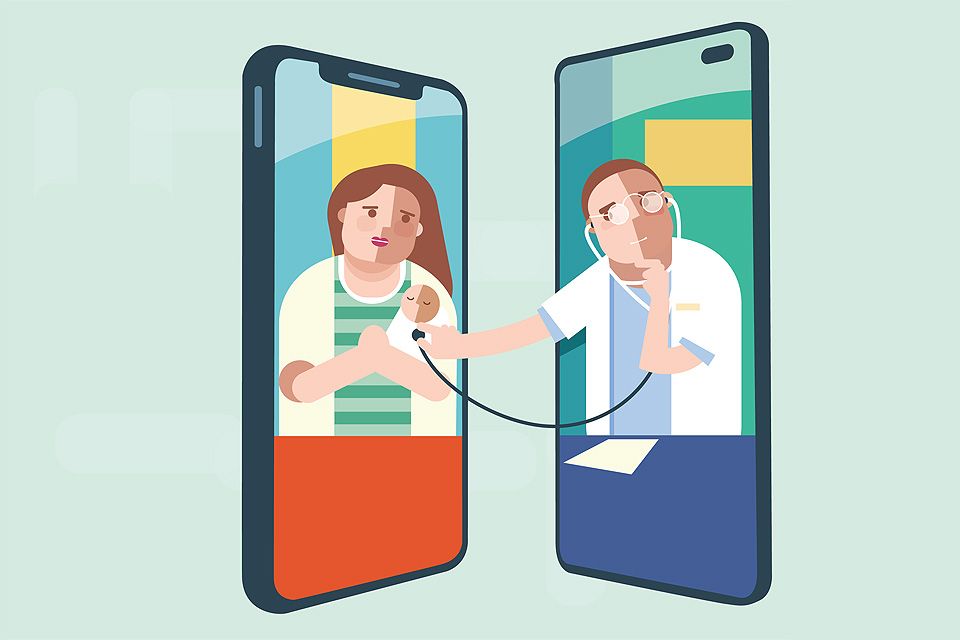
Multiple technologies can be used to deliver telemedicine consultation. The three primary modes are: Video, Audio and Text. Each mode has its own strengths, limitations and suitable contexts for delivering diagnosis and healthcare advice.
Telemedicine provides safety to medical professionals from contagious diseases. However, it cannot completely replace physical examination that requires palpation, percussion or auscultation. New technologies may reduce this limitation in the future.
Modes of Communication
| Mode | Strength | Limitations |
|---|---|---|
| Video Apps, Video platforms, FaceTime etc. |
|
|
| Audio Phone, VOIP, Apps |
|
|
| Text Based WhatsApp, Messenger, SMS, Apps |
|
|
| Asynchronous Email, Fax, Recorded data |
|
|
Benefits of Telemedicine
- Provides timely access to healthcare services.
- Saves travel cost and effort especially for rural patients.
- Reduces inconvenience for family members and caregivers.
- Reduces burden on hospitals.
- Better maintenance of medical records and documentation.
- Provides legal documentation for both doctor and patient.
- Ensures safety of healthcare workers and patients during contagious diseases.
- Useful during disasters and pandemics.
- Supports digital health systems and health-wellness centres in India.
Emergency Tele-Consultation
- If alternative care is not available, tele-consultation may be the only option to provide immediate medical advice.
- Telemedicine should be limited to first aid, life-saving measures, counselling and referral advice during emergencies.
- Patients should always be advised to seek in-person medical care at the earliest possible time.