What is Infant and Young Child Feeding?
Infant and Young Child Feeding (IYCF) is a set of well-known and common recommendations for appropriate feeding of newborn and children under two years of age. IYCF includes the following care practices:
Optimal IYCF Practices
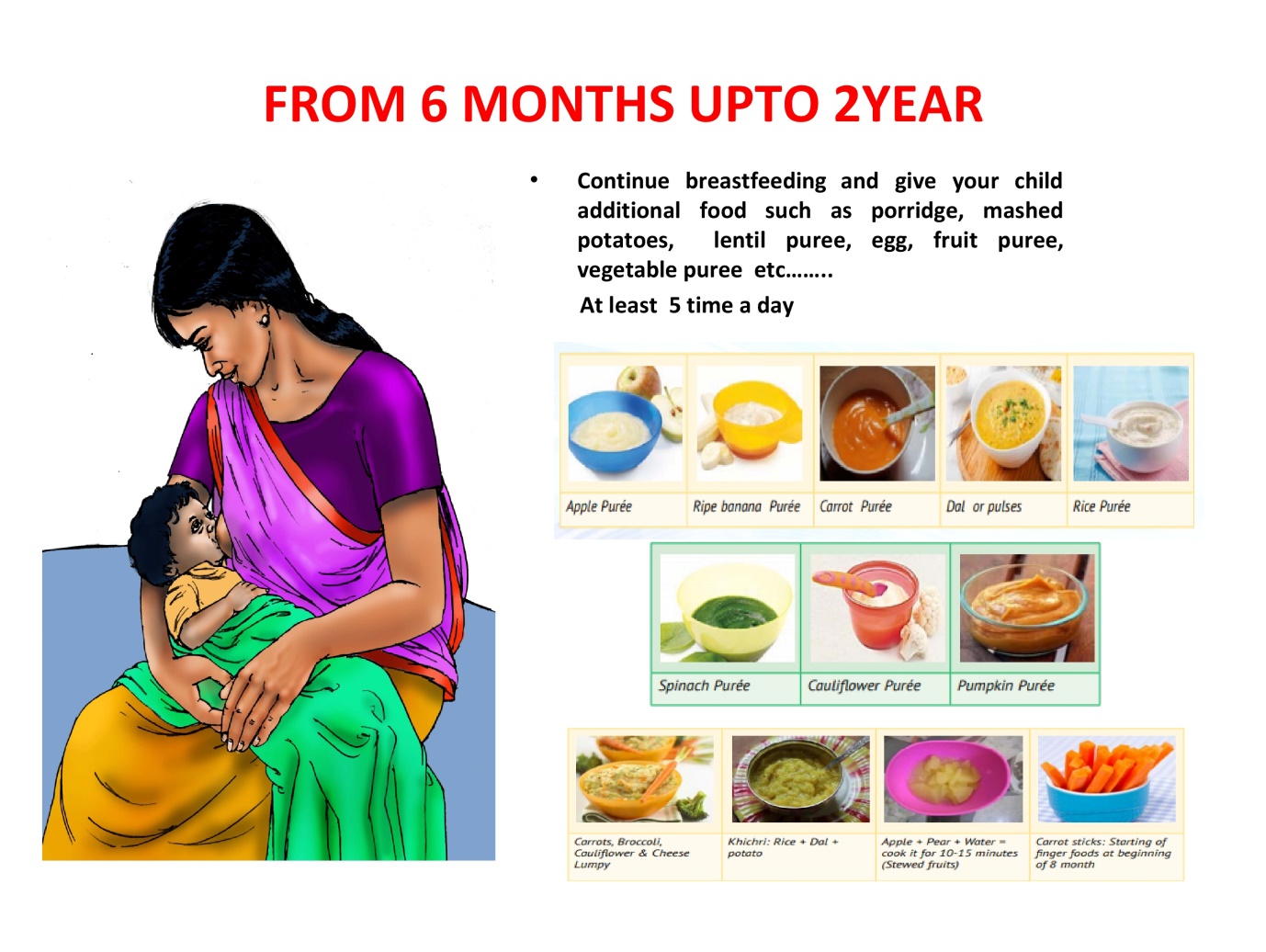
- Early initiation of breastfeeding; immediately after birth, preferably within one hour.
- Exclusive breastfeeding for the first six months of life i.e. 180 days (no other foods or fluids, not even water; but allows infant to receive ORS, drops, syrups of vitamins, minerals and medicines when required).
- Timely introduction of complementary foods (solid, semisolid or soft foods) after the age of six months i.e. 180 days.
- Continued breastfeeding for 2 years or beyond
-
Age appropriate complementary feeding for children 6–23 months,
while continuing breastfeeding. Children should receive food from
4 or more food groups:
- Grains, roots and tubers, legumes and nuts
- Dairy products
- Flesh foods (meat, fish, poultry)
- Eggs
- Vitamin A rich fruits and vegetables
- Other fruits and vegetables
Children should be fed for a minimum number of times:
- 2 times for breastfed infants 6–8 months
- 3 times for breastfed children 9–23 months
- 4 times for non-breastfed children 6–23 months
- Active feeding for children during and after illness.
What is Complementary Feeding?
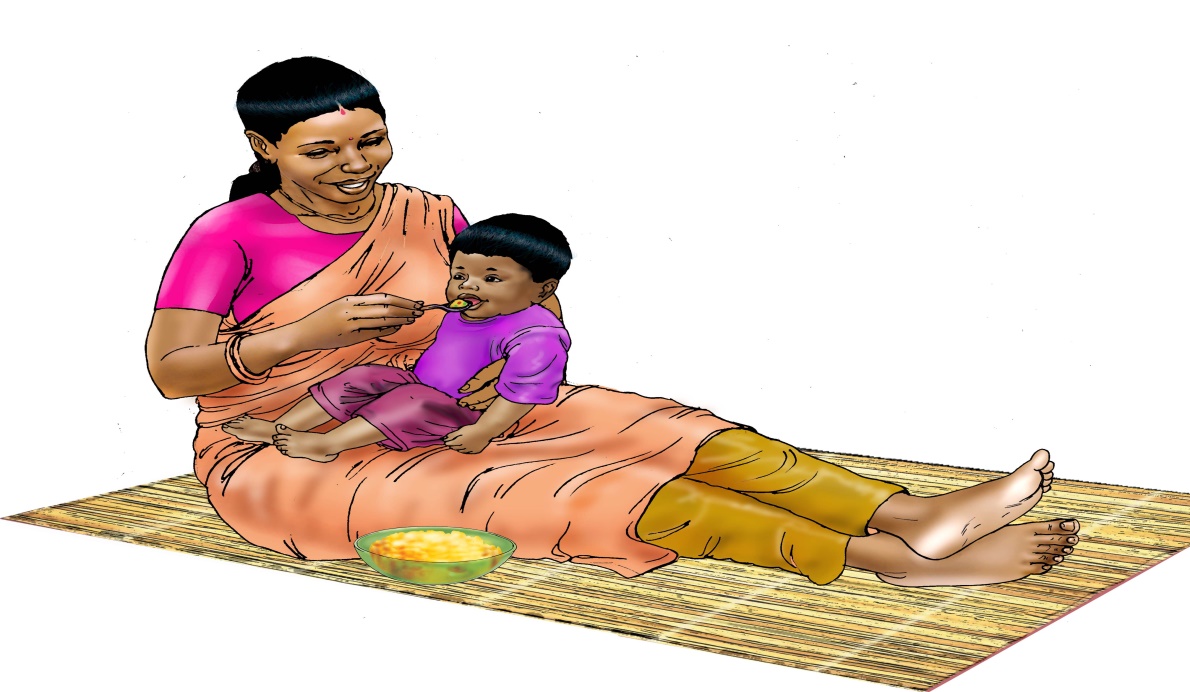
It means complementing solid/semi-solid food with breast milk after child attains age of six months. After the age of 6 months, breast milk is no longer sufficient to meet the nutritional requirements of infants. However infants are vulnerable during the transition, from exclusive breast milk to the introduction of complementary feeding, over and above the breast milk. For ensuring that the nutritional needs of a young child are met, breastfeeding must continue along with appropriate complementary feeding.
The term “complementary feeding” and not “weaning” should be used.
The complementary feeding must be:
- Timely – meaning that they are introduced when the need for energy and nutrients exceeds what can be provided through exclusive breastfeeding.
- Adequate – meaning that they provide sufficient energy, protein and micronutrients to meet a growing child’s nutritional need.
- Safe – meaning that they are hygienically prepared and stored, and fed with clean hands using utensils, and not bottles and teats.
What is Consistency of Complementary Foods?
1) Appropriately thick complementary foods of homogenous consistency made from locally available foods should be introduced at six completed months to all babies while continuing breastfeeding along with it. This should be the standard and universal practice. During this period breastfeeding should be actively supported and therefore the term “weaning” should be avoided.
2) To address the issue of a small stomach size which can accommodate limited quantity at a time, each meal must be made energy dense by adding sugar/jaggery and ghee/butter/ oil. To provide more calories from smaller volumes, food must be thick in consistency - thick enough to stay on the spoon without running off, when the spoon is tilted.
3) Consistency of foods should be appropriate to the developmental readiness of the child in munching, chewing and swallowing. Foods which can pose choking hazard are to be avoided. Introduction of lumpy or granular foods and most tastes should be done by about 9 to 10 months. Missing this age may lead to feeding fussiness later. So, use of mixers/grinders to make food semisolid/ pasty should be strongly discouraged.
What is Nutritionally Adequate Complementary Feeding?
1) Foods can be enriched by making a fermented porridge, use of germinated or sprouted flour and toasting of grains before grinding.
2) Adequate total energy intake can also be ensured by addition of one to two nutritious snacks between the three main meals. Snacks are in addition to the meals and should not replace meals. They should not be confused with foods such as sweets, chips or other processed foods.
3) Parents must identify the staple homemade food comprising of cereal-pulse mixture (as these are fresh, clean and cheap) and make them calorie and nutrient rich with locally available products.
4) The research has time and again proved the disadvantages of bottle feeding. Hence bottle feeding should be discouraged at all levels.
5) Population-specific dietary guidelines should be developed for complementary feeding based on the food composition of locally available foods. A list of appropriate, acceptable and avoidable foods can be prepared.
6) Iron-fortified foods, iodised salt, vitamin A enriched food etc. are to be encouraged.
7) The food should be a “balanced food” consisting of various (as diverse as possible) food groups/components in different combinations. As the babies start showing interest in complementary feeds, the variety should be increased by adding new foods in the staple food one by one. Easily available, cost-effective seasonal uncooked fruits, green and other dark coloured vegetables, milk and milk products, pulses/legumes, animal foods, oil/butter, sugar/jaggery may be added in the staples gradually.
What is Junk Food?
1) Junk food and commercial food, ready-made, processed food from the market, e.g. tinned foods/juices, cold-drinks, chocolates, crisps, health drinks, bakery products etc. should be avoided
2) Giving drinks with low nutritive value, such as tea, coffee and sugary drinks should also be avoided.
What is Safe Complementary Feeding?
1) Hygienic practices are essential for food safety during all the involved steps viz. preparation, storage and feeding. Freshly cooked food should be consumed within one to two hours in hot climate unless refrigerated.
2) Hand washing with soap and water at critical times including before and after preparing and feeding and after using the toilet. Hand washing should be ensured for the child as well before and after feeding and after using toilet.
What is Responsive Feeding?
1) Practice of responsive feeding is to be promoted. Young children should be encouraged to take feed by praising them and their foods. Self-feeding should be encouraged despite spillage.
2) Each child should be fed under supervision in a separate plate to develop an individual identity.
3) Forced feeding, threatening and punishment interfere with development of good / proper feeding habits.
4) Along with feeding, mother and care givers should provide psycho-social stimulation to the child through ordinary age-appropriate play and communication activities to ensure early childhood development.
The details of food including texture, frequency and average amount are enumerated in table below:
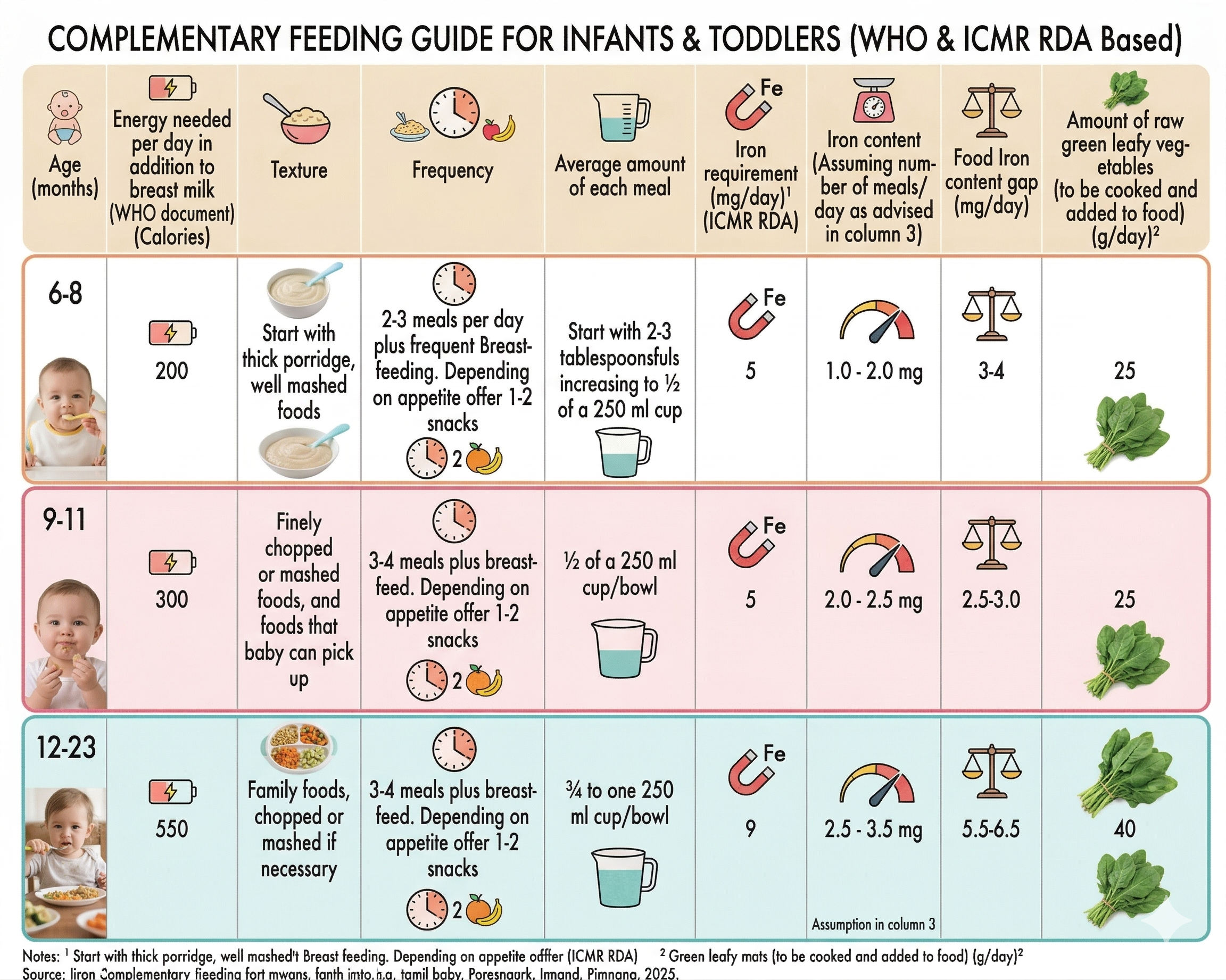
The table should be adapted based on the energy content. Find out what the energy content of complementary foods is in your setting and adapt the table accordingly.
1 Iron requirement is based on 5% bio-availability from cereal-pulse based diets.
2 Green leafy vegetables like amaranth (chaulai sag/dantu), spinach (palak), turnip leaves (shalgam ka sag), mint leaves (pudhina) and small amounts of lemona (nimbu) and tamarind (imli) added to the diet daily will sum up to provide the amount of iron recommended.
These are broad guidelines. Recipes should be adapted based on local customs.
If baby is not breastfed,
Give in addition: 1–2 cups of milk per day, and 1–2 extra meals per day. The amounts of food included in the table are recommended when the energy density of the meals is about 0.8 to 1.0 Kcal/g.
If the energy density of the meals is about 0.6 kcal/g, the mother should increase the energy density of the meal (adding special foods) or increase the amount of food per meal. For example:
- For 6 to 8 months, increase gradually to two thirds cup
- For 9 to 11 months, give three quarters cup
- For 12 to 23 months, give a full cup
Additional Pointers to Improving Quality of Feeds
- Complementary feeds: Complementary feeds containing a cereal-pulse combination of rice/rice flakes (poha)/ wheat and roasted bengal gram dhal/ soya bean/green gram dhal would increase intakes of iron, compared to other cereal-pulse combinations due to either higher absorption and/or higher iron content.
- Soaking, germination/sprouting: Soaking, germination/sprouting of cereals and pulses will reduce their phytate content by about half. To do this, soak grains overnight, and then lay on a clean wet cloth for 1–2 days. After germination, the grains can be lightly dry roasted and powdered for cooking.
- Fruits and Iron Absorption: If locally available fruits like guava (in children over 1 year of age), papaya, musambi (sweet lime), orange, and lime rich in ascorbic acid are provided as a freshly made mash along with the food, it will increase absorption of iron.
- Iron Supplementation: If an iron supplement is to be given, it is best provided after meals. This will reduce the risk of adverse events. To improve bioavailability of iron taken after the meal, use grains that are less inhibitory for iron absorption. For this purpose, rice is most neutral, followed by wheat and lastly millets. Examples of rice based complementary foods with lower inhibitory effect are a cereal: pulse combination of rice: roasted Bengal gram or rice: sprouted and roasted green gram. These combinations can be made into local recipes like rice khichdi or rice pongal or idlis for younger children. For older children, poha with crushed groundnuts can also be given. It is important to remember that the foods listed here are specifically for the day on which iron is given.